
AMAPP End of Year Newsletter 2025
A Year of Growth, Collaboration, and Courageous Hearts
From Dr Lani Roy, Chair, AMAPP
Dear AMAPP Community,
The board met on December 10th for our annual AGM. Dr Lani Roy will remain as Chair, and Lana Sciberras and Ludo Kourouvanis were re-elected as Directors and Board members. We look forward to expanding our Board and volunteers in 2026.
For a grassroots, volunteer-run NGO navigating the extraordinary complexity of psychedelic-assisted therapy where clinical evidence is still emerging, multiple contexts intersect (TGA-approved clinics, harm reduction, Indigenous practices), and diverse professional perspectives must be integrated, reaching clarity on our organisational position has been no small feat.
I'm grateful to share that our board and advisors have now done exactly that. This year, we published our AMAPP Position Statement, a comprehensive framework articulating where AMAPP stands on:
Clinical applications of psychedelic-assisted therapy (PAT) using MDMA, psilocybin, ketamine, and cannabis.
Australia's role as a global leader following the 2023 TGA rescheduling.
Multidisciplinary practice requirements and national training standards.
The intersection of clinical work with harm reduction and cultural contexts.
Support for decriminalisation and harm reduction without compromising ethics, clinical rigour, or our regulatory and professional responsibilities.
Professional lived experience and its role in ethical and stigma-free practice.
The balance between rigorous research standards and real-world client needs.
Read our summarised Position Statement here
This document represents countless hours of thoughtful discussion, member consultation, and the integration of diverse professional, cultural, spiritual, and political perspectives into a coherent, evidence-based framework. As a volunteer-led organisation, every policy document we develop is the result of volunteers giving their expertise freely, because this work matters for the community.
Our Position Statement shows that collective wisdom, when effectively harnessed, can deliver the clarity and rigour this field requires.
As I write this final newsletter of 2025, I'm reflecting on what has personally moved me this year. It's been the quiet moments; the message from a member who found support during a difficult session, the respectful debates in our policy discussions where diverse perspectives strengthened our thinking, the care with which practitioners show up for each other in supervision groups.
When I reflect on this past year, I'm struck by how much has changed, not just in our organisation, but in the conversations happening across Australia about mental health, healing, and the role psychedelics might play in both.
Here's what I've learned this year: we are stronger together.
AMAPP exists because this work demands collective wisdom. Psychedelic-assisted therapy is too important, too complex, and too ethically demanding for any practitioner to navigate in isolation. Whether through our 24/7 member platform, peer supervision groups, or consultation with experienced advisors, AMAPP provides multiple pathways for practitioners to access guidance, share clinical insights, and navigate the evolving terrain of this field together.
This year has demonstrated that AMAPP's strength lies not in providing prescriptive answers, but in creating the conditions for rigorous peer consultation, genuine collegial support, and mutual accountability to the highest standards of care. We advance this work with open minds and courageous hearts, grounded in both professional expertise and the lived experience of altered states.
2025: Our Biggest Milestones
PACFA Collaboration
Our partnership with PACFA (the national peak body for psychotherapy and counselling) aims to create nationally consistent quality standards for PAT training. This partnership ensures training providers meet both psychotherapeutic and medical safety standards before practitioners enter the PAT field.
PACFA's August 2025 TGA submission formally endorsed the inclusion of Registered Clinical Psychotherapists and Registered Clinical Counsellors in PAT, provided they undertake additional specialised training and credentialing as outlined by AMAPP .
This partnership reflects deep alignment with AMAPP values: PACFA's framework of psychotherapeutic competencies emphasises trauma expertise, somatic skills, relational depth, and holistic integration. These are precisely the competencies needed to address the unpredictable and transformative nature of psychedelic experiences. Their mandatory personal therapy requirement grounds Registered Clinical Psychotherapists in altered states through lived experience, while cultural safety competencies honour the cross-cultural origins of psychedelic practices.
Impact: This collaboration expands the future PAT workforce by recognising competencies rather than professional titles alone, while maintaining strong client protections through rigorous standards. It also creates a clear quality-assurance pathway that the TGA can draw upon when setting clinical competency expectations in the years ahead.
Read the PACFA TGA submission here
Are you a PACFA member? Register your interest to contribute to the AMAPP/PACFA PAT Clinical Guidelines Committee chair@amapp.org.au
TGA Stakeholder Meeting — Your Voice at the Table
On November 19, I met with the TGA alongside other peak bodies to discuss MDMA and psilocybin guidelines. The TGA will release updated guidelines by early 2026.
Impact: Your practice experiences and clinical insights directly informed our advocacy for multidisciplinary recognition.
Read our TGA Consultation Review Document here
Practitioner Database & Credentialing Framework Launched
Our public registry now connects the community with accredited PAT practitioners across Australia. AMAPP has developed a comprehensive PAT credentialing framework for three practitioner categories:
Psychedelic-Assisted Psychotherapists
Authorised Prescribers
Psychedelic Facilitators
Learn about our credentialing framework here
Impact: Building public trust through transparent standards while supporting ethical practitioners. Eligible members can apply for credentialing and listing to demonstrate their commitment to professional excellence.
Student Placement Partnerships
We're developing supervised placements with Monash Talent, ACAP, and Ikon Institute.
Impact: Building the next generation of skilled, ethically grounded PAT practitioners.
Academic Recognition
Dr Traill Dowie presented at the RANZCP Congress and published new peer-reviewed research, bringing PAT knowledge to mainstream psychiatry.
Impact: Legitimacy in conventional medical practice.
Policy Leadership
Members contributed to shaping Australia's PAT landscape through key documents:
Critical Analysis of Monash MDMA Document
TGA Stakeholder Consultation Submission addressing multidisciplinary implementation
AMAPP Mission Statement articulating our three pillars: Peer Support, Advocacy, and Trust.
Comprehensive Position Statement (26 pages) on clinical applications, workforce considerations, cultural responsivity, and harm reduction.
National Review of the MDMA-AP Standards contributing to evolving clinical frameworks.
Impact: These evidence-informed submissions continue to shape how psychedelic therapy develops in Australia with scientific rigour, wisdom, and courage.
Read our MDMA critical review of Monash training guidelines here
Read our AMAPP Mission Statement here
Read our Comprehensive Position Statement here
What Gives Me Hope for 2026
This work is being shaped by people who have sat in the profound mystery of altered states themselves, who bring both professional rigour and personal humility to this field. You understand that these medicines deserve our deepest respect, our most careful practice, and our willingness to keep learning.
In 2026, we're expanding our vision beyond clinical practitioners alone. We're developing partnerships with universities for research collaboration and student training. We're entering the sacred space of end-of-life care, where psychedelics meet our deepest existential questions about mortality, meaning, and what it means to die well.
Most importantly, we're broadening our membership to include the wider community, because psychedelic work demands truly multidisciplinary and interagency collaboration.
Why Multidisciplinary Voices Are Essential
Altered states of consciousness don't respect professional boundaries. When someone sits with these medicines, they're not just addressing mental illness; they're confronting spirituality, mortality, existential meaning, human rights, artistic expression, community connection, and the fundamental questions of what it means to be human.
This work touches everything: psychiatry and psychology, yes, but also philosophy, anthropology, arts therapy, pastoral care, Indigenous wisdom, harm reduction, peer support, neuroscience, phenomenology, ethics, law, and the lived experience of those who've walked through darkness and found their way back.
To meet this complexity with integrity, we need complex thinking. We need the psychiatrist and the social worker, the psychologist and the artist, the researcher and the peer worker, the ethicist and the person with lived experience. We need voices from clinical trials, harm reduction and cross-cultural ceremony contexts. We need those trained in Western medicine and those grounded in ancient traditions.
The conversations are harder this way. The consensus takes longer. The frameworks must hold more tension. But this is exactly what the work demands.
Because when we gather around these medicines, whether in a clinic, a research setting, or in service of those facing death, we're not just treating symptoms. We're holding space for the full spectrum of human experience, including its beauty and its catastrophe. That requires all of us to bring everything we know, everything we've experienced, and everything we're still learning.
In 2026, we're building the infrastructure for these voices to come together—not just coexist, but truly collaborate, challenge one another, learn from one another, and create something none of us could build alone.
Our 2026 priorities:
University partnerships for research collaboration and training pathways
End-of-life care applications of PAT
Expanding membership to wider community sectors for true multidisciplinary collaboration
Forming a PACFA-AMAPP Psychedelic Assisted Psychotherapy training endorsement framework
Growing to 100+ credentialed practitioners across all states.
Expanding scholarships for First Nations practitioners and students
Congratulations to Entheogenesis Australis on the Planting Psychedelic Seeds Conference 2025.
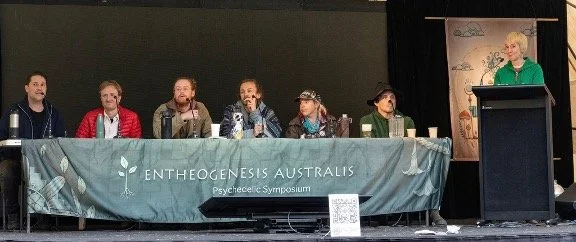
The EGA conference opened with Uncle Mark Brown, Bunurong Elder and Senior Cultural Heritage Officer, offering Welcome to Country - grounding us in place and reminding us of the ancient relationship between people, plants, and Country that precedes and informs all our work.
We are grateful for the vibrant community that gathered, where science, art, culture, and harm reduction converged in meaningful dialogue.
We extend special thanks to Martin Williams for his leadership in exploring global psilocybin access models and establishing Garden States; Monica Barratt for her vital harm reduction research on drug checking; Nick Kent for bridging solidarity and pharmacotherapy through opioid peer perspectives; Vince Polito for bringing rigorous inquiry to altered states of consciousness; and Alex Gearin for weaving ayahuasca phenomenology and time travel into our understanding.
The multidisciplinary depth was extraordinary: Petra Skeffington and Stephen Bright mapping the spectrum from clinics to community in Australian psychedelic-assisted psychotherapy; Caine Barlow and Simon Beck illuminating wood-lover paralysis; Verity Litten and Tobias Penno restoring meaning to madness; Nigel Strauss exploring psychedelics and soul; Tehseen Noorani reflecting on community strategizing in Aotearoa and co-facilitating "The Tomorrow Party" panel with Anna Conrick, Kirt Mallie and Alex Gearin on weaving collective futures for healing practices; Melissa Warner tracing cyberdelics from vine to neural net; Kirt Mallie sharing Wayapa Wuurrk's approach to earth connection and ancestral healing; Dafna Kronental offering yin yoga and somatic mindfulness; Nicola Gracie facilitating creative therapeutic arts integration; and Samuel Douglas composting the psychedelic dream through fungi and political depression.
The program’s multidisciplinary depth was extraordinary, with speakers spanning clinical practice, research, culture, and the arts:
Petra Skeffington & Stephen Bright: Mapped the spectrum from clinics to community in Australian psychedelic-assisted psychotherapy.
Caine Barlow & Simon Beck: Shed light on wood-lover paralysis.
Verity Litten & Tobias Penno: Explored ways of restoring meaning to experiences of madness.
Nigel Strauss: Examined the intersection of psychedelics and soul.
Tehseen Noorani: Reflected on community strategising in Aotearoa, and co-facilitated The Tomorrow Party panel with Anna Conrick, Kirt Mallie & Alex Gearin on weaving collective futures for healing practices.
Melissa Warner: Traced cyberdelics from vine to neural net.
Kirt Mallie: Shared Wayapa Wuurrk’s approach to earth connection and ancestral healing.
Dafna Kronental: Offered yin yoga and somatic mindfulness.
Nicola Gracie: Facilitated creative therapeutic arts integration.
Samuel Douglas: Reflected on “composting” the psychedelic dream through fungi and political depression.
This gathering brought together members and advisors from APS, AMAPP, EGA, and the wider community, including researchers, artists, clinicians, ethnobotanists, First Nations knowledge holders, and advocates. It demonstrated that advancing this ecosystem requires genuine collaboration across disciplines and organisations. Uncle Mark Brown closed the conference with a Healing Country Ceremony, bringing us full circle.
Together, we continue to cultivate systems of care and community for our professionals, the people we serve, and the Earth itself.
AMAPP acknowledges Jonathon (Ronny) Carmichael, President of Entheogenesis Australis (EGA), for his leadership and his ongoing commitment to ethnobotanical wisdom, culture, community, First Nations medicines, and the arts.
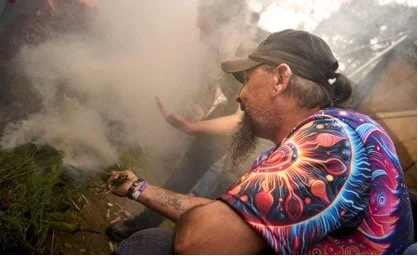
As Australia’s peak body for psychedelic-assisted therapy, AMAPP works to bring research into real-world practice while balancing both potential and risk. We value evidence-informed education, harm reduction, cultural respect, and multidisciplinary collaboration. These are principles we see reflected in EGA’s work and in the Planting Psychedelic Seeds conference, and they are why we are proud to support and stand alongside EGA and its community.
Academic Recognition Update
A/Prof Tra-ill Dowie continues to represent AMAPP and the broader psychedelic-assisted therapy community on the international stage.
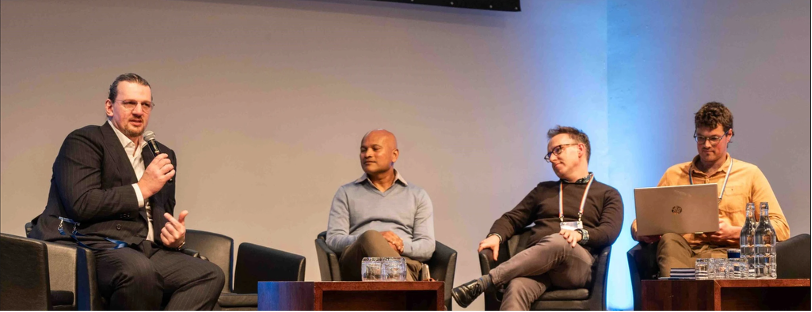
This year, he presented “The Problem of Psychiatric Autonomy: Between Clinical Necessity and Philosophical Ambiguity” at the Royal Australian and New Zealand College of Psychiatrists (RANZCP) Congress in New Zealand, highlighting the critical intersections between psychiatry, ethics, and psychedelic-assisted therapy.
His thought-provoking work deepens the field’s philosophical foundations and strengthens AMAPP’s bridge between clinical practice and academic research.
Not Yet a Member? Join Us in 2026
Whether you're a clinician, researcher, educator, harm reduction specialist, or integration worker, AMAPP offers a professional home committed to collaboration, integrity, and innovation.
What you get:
24/7 peer support from practitioners who understand this work
Free monthly webinars and peer supervision
Voice in shaping policy and practice standards
Access to credentialing and public practitioner listing
Connection to a multidisciplinary community united by professional expertise and lived experience.
Membership tiers:
Standard $300/year | Students $150/year | Application fee $50
Click Here To Join AMAPP Today
Donate
Why Donate?
Your generosity helps us to:
Maintain and grow free peer support offerings, including national supervision groups and a 24/7 learning and practitioner support platform.
Deliver clinical education through free webinars, tools, and training resources led by local and global experts.
Develop and uphold our practitioner credentialing framework and maintain the public practitioner database to promote safe, qualified care.
Provide scholarships and subsidised memberships for:
Students
First Nations practitioners
Clinicians
Community leaders experiencing financial hardship
Sustain essential infrastructure, including:
Website and communication tools,
Member dashboard and event hosting
Learning platforms and administrative systems
Drive national advocacy and systemic change by:
Supporting ethical frameworks and practitioner protections
Funding named roles, such as a Cultural and Lived Experience Advisor
Sponsoring educational events, workshops, and collaborative training opportunities
Every donation strengthens our connected, supported network of practitioners committed to healing, justice, and harm reduction.
Click Here To Donate Now
Note: AMAPP is a registered charity. Donations over $2 are tax-deductible.
Our Wish for You
As we move into the new year, my wish for you is space to rest, to integrate what 2025 has taught you, and to reconnect with what called you to this work in the first place. May you feel supported, may your practice be sustainable, and may you know that you're part of something larger than any of us alone.
With deep gratitude and warm wishes for the season,
Dr Lani Roy
Chair, AMAPP, and the whole AMAPP team
Quick Links
Contact: info@amapp.org.au
Website: amapp.org.au
LinkedIn: linkedin.com/company/amappau
Facebook: https://www.facebook.com/amapp.au
AMAPP is a registered charity and not-for-profit volunteer-run organisation dedicated to advancing safe, ethical, and culturally informed psychedelic-assisted therapy in Australia.
